
I want to build a world in which technology carries more of the complexity of being alive, while people keep the authority to decide what their lives mean.
We already live across hundreds of systems. Our conversations, work, photographs, appointments, purchases and plans are scattered between applications that rarely understand one another. Each new tool asks us to begin again. Each new assistant needs another explanation. Convenience often arrives with an uncomfortable bargain: give a system more access, then trust that it will use that access well.
I believe we can ask for something better. Our digital lives should work together without becoming someone else’s property. Intelligence should help us act, remember and create without quietly taking the right to decide away from us. That is the future I want SEAL to help make possible.
EVERYTHING WORKING TOGETHER
The ambition is enormous: automatic synchronization, agent coordination, continuity across devices, and institutional integration. Your applications, information and assistants should be able to cooperate as parts of one life, under rules that belong to you.
Imagine changing a plan once and having the appropriate parts of your world respond. A journey moves. Your calendar reflects it. An assistant prepares alternatives. The people who need an update receive the update you have authorized. Your private reasons stay private. You do not spend the afternoon moving the same information between five different windows.
This requires more than connecting accounts. Systems need to understand where information came from, which version is current, what an agent may do, and when a person must decide. They need to carry context across boundaries without treating every boundary as permission to collect everything.
I see SEAL becoming the coordination layer for that world: a place where information, intention and authority can meet. It should make complexity manageable enough that people can use powerful systems without having to become experts in all of them.

THE MOST ADVANCED TECHNOLOGY SHOULD FEEL LIKE CALM
I do not imagine the future as a permanent storm of notifications. I imagine an ordinary morning.
A family has breakfast. The practical details of the day are ready when needed. A change to the journey has been noticed; an alternative is waiting. A document can be found without remembering which application holds it. A child gets help learning without becoming a permanent profile for sale. A parent can give an assistant permission to arrange something without giving it permission to inspect everything.
At work, a person returns to a project and finds the thread intact. Their agents know the task, the relevant decisions and the limits of their authority. Moving between devices does not mean rebuilding the same context. Working with a new tool does not mean surrendering an entire history.
These are imagined experiences, not a description of the current alpha. They are the standard I want us to work toward: less administration, fewer repeated explanations, more time and attention for the people and work we care about. The most meaningful sign of progress may be how rarely technology asks us to think about technology.

SEAL CONTROLS SYSTEMS. PEOPLE CONTROL SEAL.
If SEAL is to coordinate more of life, its power must remain accountable to the people it serves. A system cannot claim to empower humanity while making its own authority impossible to question.
An agent’s authority should be borrowed for a purpose. It should have a scope, a duration and an understandable record. There should be a meaningful difference between finding a document, drafting a response, sending it, spending money and making a commitment. An instruction to help is not permission to do anything that might be useful.
People should be able to see what happened, understand why it happened, correct a mistaken assumption and stop what comes next. Consequential decisions should ask for attention where attention matters. Routine work should proceed within boundaries people understand, rather than exhausting them with meaningless approval prompts.
This is what “the power belongs to humans” must mean in practice. It is a design obligation, not a slogan placed above a system that behaves otherwise.
A MEMORY THAT LEAVES ROOM TO CHANGE
Memory is part of freedom. So is the ability to outgrow it.
A useful assistant should remember what matters without turning yesterday’s version of a person into a permanent verdict. Information needs context, provenance and the possibility of correction. A preference can change. A conclusion can be wrong. A record may no longer deserve a place in the future.
I want SEAL to support continuity without imprisonment: the ability to carry your history between tools, decide which parts are relevant, and leave behind what you no longer want to carry. Privacy includes choosing when a memory travels and when it stays close to home.
There are real boundaries here. Stopping future access cannot guarantee the erasure of a copy already received by someone else. A trustworthy system must explain those limits clearly. It should never sell an impossible promise simply because the promise sounds reassuring.
SECURITY AND CONVENIENCE BELONG IN THE SAME DESIGN
People should not have to choose between a life that works and a life they control. If staying secure requires endless manual effort, the design has transferred its burden to the person it was meant to protect.
Our direction is to make useful coordination happen with appropriate information, appropriate permission and visible boundaries. Some tasks can stay close to the person and their devices. Others require a deliberate handoff. A recipient should receive what a task needs, rather than an entire life by default.
Security will always require engineering, evaluation and honest treatment of failure. Encryption alone cannot settle questions of judgment, consent or power. The experience must help people understand what they are authorizing, and the system must remain accountable when something goes wrong.
The goal is not to make people feel watched over. It is to let them feel capable, supported and free to pay attention elsewhere.
BUILT BY PEOPLE, FOR PEOPLE
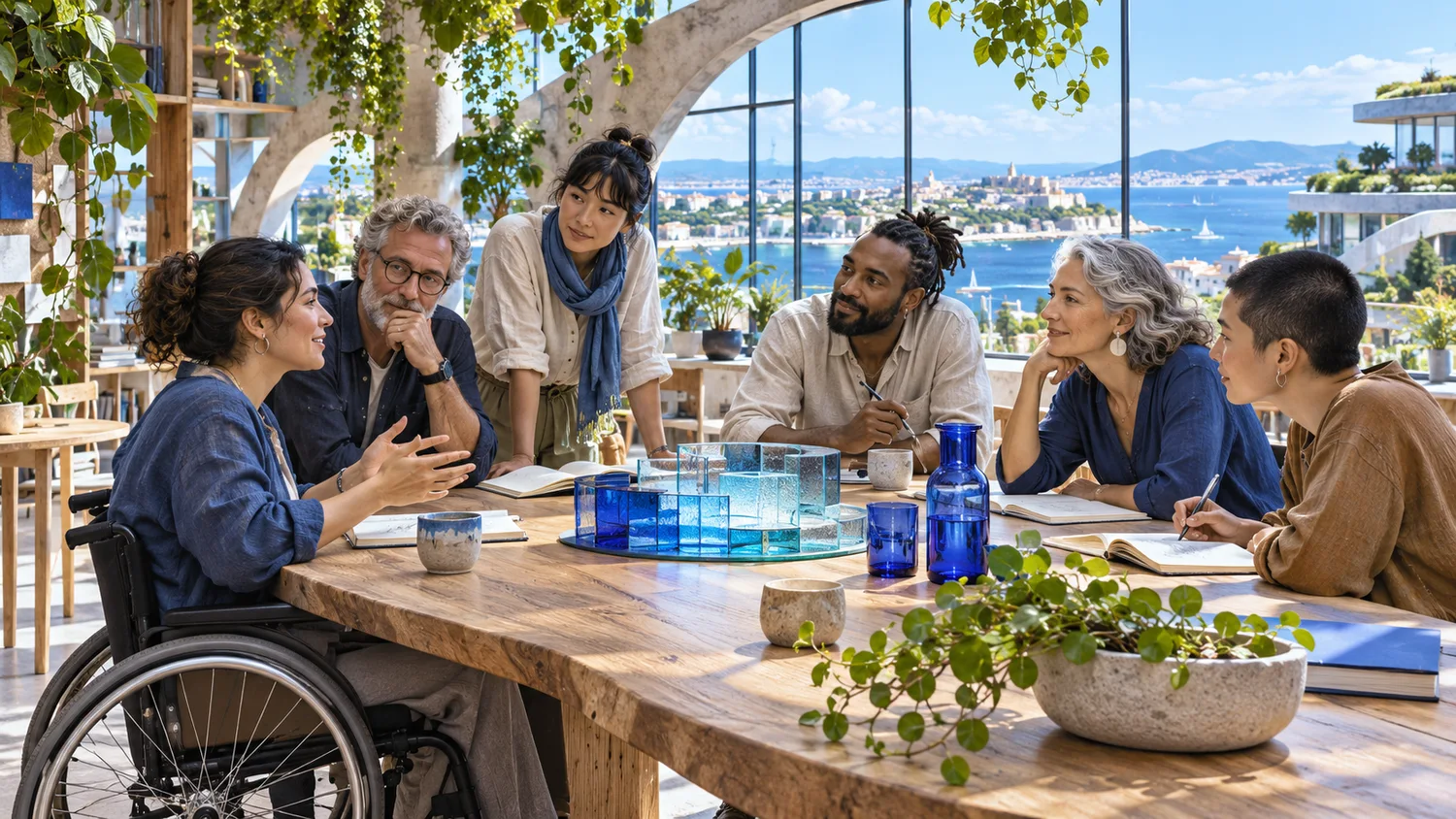
This future cannot belong only to people with the newest devices, the largest budgets or the patience to configure complicated systems. It must work across different abilities, languages, institutions and ways of living.
A student, an independent creator, a family and a large organization need different forms of support. Their underlying claim to agency is the same. An organization should be able to coordinate its knowledge and agents while respecting the boundaries between roles, teams and the people whose information it handles.
Interoperability matters because no single company should own the doorway to a person’s life. Portability matters because leaving must remain a real option. A successful SEAL should earn trust through usefulness and accountability, not through making departure impossible.
I want SEAL to become infrastructure people can rely on. I do not want a world made deliberately unable to function without one company’s permission. Dependability is an achievement; captivity is a failure.
FIFTY YEARS FROM NOW
When I imagine 2076, I see a world with far more agents, devices and automated institutions than we have today. Intelligence may be woven into transport, workplaces, homes, education and public services. The question will be whose intentions that intelligence serves.
In the future I am working toward, a person can move through that world with continuity and dignity. They do not need to expose every part of themselves to participate. Their agents can cooperate with institutions without becoming instruments of those institutions. A city can be responsive without making every resident completely visible.
SEAL’s role in that imagined world is to help hold the relationship between capability and authority together. It should translate a person’s intentions into coordinated action while keeping the right to revise those intentions with the person. The measure of intelligence is not simply how much a system can do. It is how much more freely a person can live because it exists.
These are aspirations, not a prediction or a delivery schedule. Fifty years of progress will involve choices we cannot yet anticipate. The principle should survive those changes: systems may become more powerful; human agency must become stronger alongside them.
THE FUTURE BEGINS WITH WHAT WE BUILD NOW
SEAL is in alpha today. Its existing work on protected, portable memory, local retrieval and controlled handoffs is a beginning. Universal application synchronization, broad agent orchestration and the institutional future described here remain work ahead.
We should be honest about that distance and ambitious about crossing it. A vision becomes useful when it changes what we choose to build, test and refuse today. We can begin with a record that stays under a person’s control. We can make a handoff clearer. We can remove one unnecessary disclosure, one repeated explanation, one dependency that makes people smaller.
My vision for SEAL is a world in which our digital lives become coherent without our lives becoming controlled. A world where intelligence works around us, where security supports convenience, and where progress gives people more room to be human.
Everything working together. You in control.
THE POWER BELONGS TO HUMANS.